
You might be thinking: Who even reads those? You literally just plug it in and plug other things into it. And you’re 100% right about that. Thanks to how often and how early in our lives we plug in our devices to access electricity, we all know how the process works. The concept is almost as simple as a puzzle.
This plug perfectly matches that socket; put them together and voilà, the miracle of electricity.
So Kevin, why the hell did you read that manual and what does it have to do with you pursuing a technical writing career?
‘Cause it was funny.
I went out to buy a new power strip for my room when I was in university, and instead of throwing out the manual that came with it, for some reason I decided to glance at it.
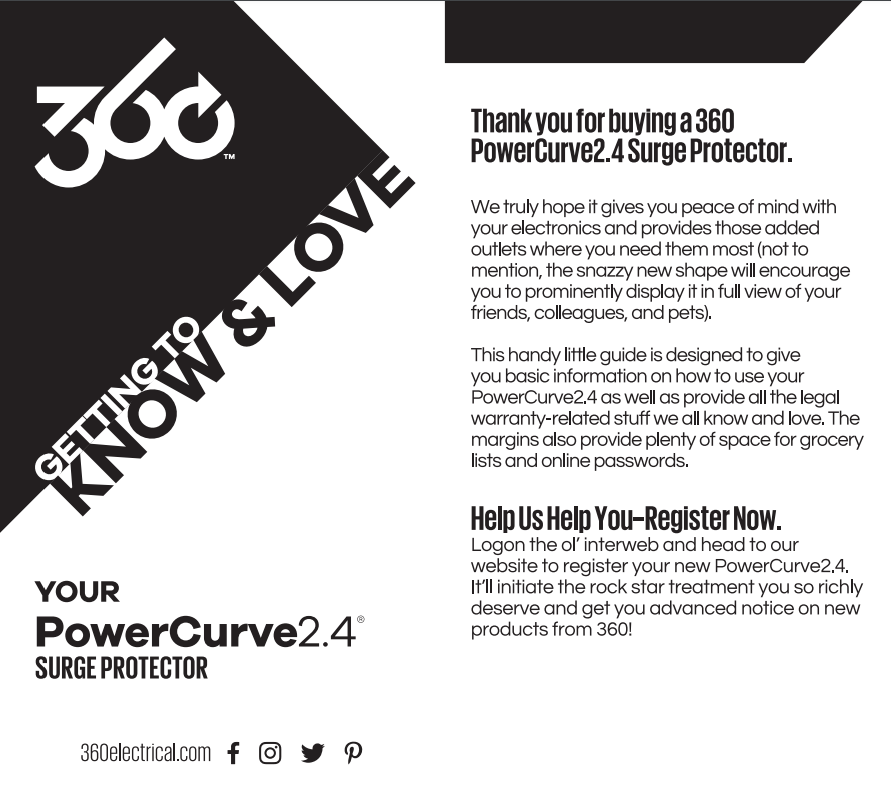
It came in the form of a brochure, and in grayscale. Considering the fact that there are no eye-grabbing colours, I’m surprised it got my attention (the figure-ground of the text and logo did a good job of that in the absence of colour). The first paragraph is really what made me keep reading, though.
…the snazzy new shape will encourage you to prominently display it in full view of your friends, colleagues, and pets…
I thought that was pretty funny, so I continued reading. After opening the brochure, I found that each section had a very casual heading that you wouldn’t normally associate with a manual for a power strip.

While providing the specs of the product, explaining the warnings, and showing a diagram of the product, they decided to go with a very “chill” and sarcastic tone.


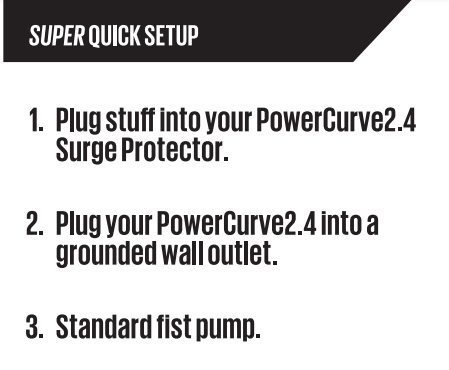
Some people might disagree with the approach that they went for (too casual, adds too much fluff/unnecessary reading for the user), but for me personally I think they did something right. Me, a customer who bought the product, read the manual from start to finish. I also learned things along the way I didn’t know about how surge protection works and what the lights mean. That’s exactly what they were going for.
Additionally, I actually laughed while reading it.
I think what happened here was that the product team tackled the No one reads these anyway problem by saying You know what, let’s at least make it entertaining so there’s a higher chance customers read more.
They weighed the risk of possibly compromising the reading experience for the user to efficiently read the manual with getting them to even read it in the first place. To me, that is a win.
Now obviously I don’t think this approach works for everything. I think the fact that most people understand how power strips work and how they can be dangerous if used incorrectly is common sense, definitely gave them some creative freedom to do this. If you bought something really difficult to use and the manual that came with it was really sarcastic/quirky, I don’t think you’d be amused.
After reading this manual, it really did make me think a little bit: Why did I read this? Why did I enjoy reading it? I then started paying attention to how other manuals or quick start guides are written when I came across them.
Inevitably, I came across some truly horrendous documentation. A lot of products sold on online sites are re-labelled products manufactured from China. Honestly, it’s rare to see good documentation in English coming from an inexpensive product. Most of the time reading the manual to find out how the product works actually takes longer than just fiddling around with it until you figure out how to use it because of how poorly it’s written.
Whenever I came across these types of manuals I thought: I could write something better than this.
 Technical Kevin